Market Analysis
BOS vs CHoCH: Break of Structure and Change of Character
BOS vs CHoCH: how a break of structure differs from a change of character, with close and wick rules, timeframes, false breaks and how to test them.
The Magazine
Clear, practical writing on how the forex market works and how to approach it sensibly.
BOS vs CHoCH: how a break of structure differs from a change of character, with close and wick rules, timeframes, false breaks and how to test them.
Copy trading mirrors another trader's positions in your own account. Learn how sizing works, what the fees cost and how to read a provider's record.
How to trade forex news: why prices jump on releases, three approaches and their risks, what spreads and slippage cost, and a news-day checklist.
Risk of ruin is the chance your account hits a set loss before you reach your goal. See how risk per trade, win rate and reward-to-risk drive it.
Order blocks in forex explained: mark a bullish or bearish block, choose body or wick, track mitigation and invalidation, place stops and test the idea.
Forex signals are trade ideas sold in Telegram, WhatsApp and Instagram groups. Learn how the groups earn money and how to test a record on demo.
A prop firm challenge is a paid test on simulated capital. Learn the rules, the fee model, payouts and the risk maths of a $100,000 challenge.
Elliott wave theory explained fairly: the 5-3 wave pattern, the three hard rules, Fibonacci ratios, why counts change and what tests can show.
A forex VPS keeps an expert advisor running 24/5 close to your broker's server. Learn when it helps, when it wastes money and how to keep it secure.
A forex weekend gap is the jump between Friday's close and the Sunday open. Learn why gaps happen, how stops fill in them and how to size weekend trades.
How to backtest a trading strategy honestly: fixed rules, 100+ trades, out-of-sample data, real costs, results in R and a forward test on demo.
The Ichimoku cloud uses five lines to show trend, momentum and support zones at a glance. Learn each formula, how to read the cloud and where it fails.
A liquidity sweep is a quick move through an obvious high or low that triggers stops and reverses. See where stops cluster, why they happen and the risks.
The London breakout strategy explained: mark the Asian range, plan entries, stops and targets, handle false breaks and spreads, and test it before use.
A margin call in forex warns that equity is close to used margin; a stop out closes trades. See both worked out on a $2,000 account, step by step.
Market structure in forex is the pattern of swing highs and lows. Learn one swing rule, break of structure vs change of character, and where they fail.
Pivot points in forex explained: the classic formula, a worked EUR/USD example, Fibonacci and Camarilla variants, how traders use them and where they fail.
RSI divergence warns that momentum is fading, not that price will turn. Learn regular and hidden divergence, how to draw it and how to confirm it.
The stochastic oscillator shows where price closed within its recent range. Learn the %K and %D formula, 14,3,3 settings, crossovers and where it fails.
Supply and demand zones mark where price based before a strong move. Learn a consistent drawing rule, fresh vs tested zones, and how to test them honestly.
You can trade forex on your phone, but small charts, easy mistaps and constant alerts change how you trade. Set it up safely and spot fake trading apps.
The 1% rule in trading caps the loss on any trade at 1% of your account. Why it survives losing streaks, how to size lots from it and when 0.5% is better.
What is a CFD? How a contract for difference makes or loses money, how it compares with spot forex and futures, and what leverage and overnight fees mean.
The ATR indicator measures how far a pair typically moves per candle. Learn the average true range formula and how to use it for stops and position size.
AUD/USD trading explained: how China, iron ore, the RBA and risk mood move the Aussie, when it is active, what a pip is worth and how to size trades.
Base currency vs quote currency explained: how to read any forex pair, what buying it means, which currency your profit is in and why pairs are ordered.
The best currency pairs for beginners pass five tests: liquidity, low cost, news you can follow, your hours and calm moves. How to pick one to three.
Bid, ask and spread in forex explained: why you buy at the ask and sell at the bid, how to work out spread cost in money, and why spreads widen.
Bollinger Bands explained: how a 20-period average and two standard deviations measure volatility, what a squeeze means and why a touch is not a signal.
Breakout trading in forex explained: why fakeouts happen, how to confirm a break, where to enter, stop and target, and how London open breakouts work.
Learn 12 candlestick patterns, from the hammer and doji to engulfing and morning star: what each shows, where it matters and where the stop goes.
The carry trade explained: how holding a high-rate currency against a low-rate one earns swap, why markups eat it and why it unwinds so violently.
Central banks and forex explained: what the Fed, ECB, BoE and BoJ aim for, the tools they use, when they speak and how their decisions move currencies.
Chart patterns explained: how double tops, head and shoulders, triangles, flags and wedges form, how to confirm them, and where stops and targets go.
Commodity currencies explained: why CAD follows oil, AUD follows iron ore, NZD and NOK follow their exports, and why the links break when you lean on them.
CPI forex guide: what the consumer price index measures, headline vs core, why inflation data moves currencies and how to handle a CPI release safely.
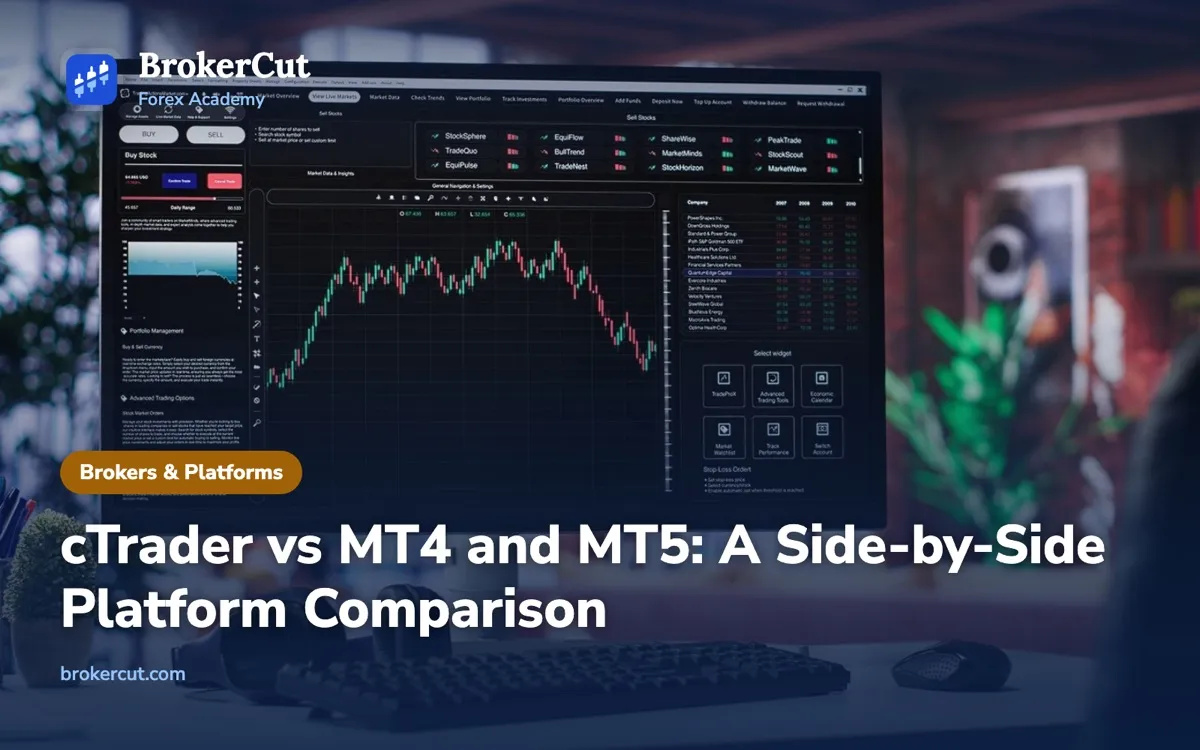
cTrader vs MT4 and MT5 compared: charts, depth of market, order types, C# vs MQL automation, copy trading, broker availability and a decision guide.
Currency correlation explained: what the coefficient means, why pairs move together, and how to count your net exposure so three trades are not one bet.
Drawdown in trading explained: peak to trough, maximum and relative drawdown, the recovery maths, normal ranges by risk, and a plan for getting back.
ECN vs market maker brokers explained: who takes the other side of your trade, how each gets paid, A-book and B-book, and how to compare the real costs.
EUR/GBP trading explained: how the euro–pound cross is priced from two dollar pairs, its pip value in pounds, what moves it and why it ranges.
EUR/JPY trading explained: how the euro yen cross is built from two dollar pairs, what a pip is worth, what moves it and why it tracks risk mood.
EUR/USD trading explained: what moves the euro-dollar pair, what a pip is worth, when it is most active and a checklist for trading days.
Exotic currency pairs explained: why USD/TRY, USD/ZAR and USD/MXN cost more, gap harder and carry political risk, and whether beginners should trade them.
Fibonacci retracement in forex explained: how to draw it from swing low to high, what each level means and how to pair it with support and resistance.
FOMO trading explained: why you chase moves and missed trades, what a late entry does to your risk-reward, and the rules that stop impulsive trading.
Forex broker regulation explained: what the FCA, CySEC, ASIC and NFA protect, what offshore licences lack, and how to check a licence on the register.
Forex broker scams follow one script. Learn the 9 red flags, how to check a broker licence on the register, spot clone firms and avoid recovery scams.
A forex demo account lets you practise on live prices with virtual money. Learn how demo differs from live, how to use one properly and when to go live.
A forex deposit bonus looks like free money but usually locks your cash behind trading-volume targets. See the maths, the rules and the red flags.
Forex order types explained: market, limit, stop, stop-limit and OCO orders, which price triggers each, and why stops can slip while limits may not fill.
Forex risk management in layers: risk per trade, stops, position size, reward-to-risk, open risk, loss limits, leverage and drawdown maths.
Forex swap explained: why holding a trade past the daily rollover costs or pays you, how triple Wednesday works and how to turn swap points into money.
Forex timeframes explained: what M5, H4 and D1 mean, how each suits scalping, day or swing trading, and how to choose one that fits your time and costs.
Forex trading costs explained: spread, commission, swap, slippage and hidden fees, worked out per trade, per lot and per month with clear numbers.
Forex trading for beginners, step by step: a 30-day plan covering market basics, charts, risk and demo trading, with honest expectations and daily tasks.
Forex vs stocks compared: opening hours, leverage, costs, what you own, dividends vs swap, regulation and volatility, and which market suits which trader.
How a forex withdrawal works: the return-to-source rule, KYC documents, typical timelines, fees, how open trades limit it, and what to do if it stalls.
Fundamental analysis in forex explained: what moves currency prices, why surprises matter more than headlines, and how to use it alongside your charts.
GBP/JPY trading explained: why the pound–yen cross swings so far, what a pip is really worth, and how to size trades for its wide daily ranges.
GBP/USD trading explained: why cable swings further than EUR/USD, what moves it, when it is busiest and how to size trades for its wider ranges.
GDP forex guide: what gross domestic product measures, how annualised US growth works, and why GDP data often moves currencies less than CPI or jobs.
Hawkish vs dovish explained: the words, dot plots, votes and press conference cues that show where rates are heading, and why tone can beat the decision.
How does forex trading work? Follow one order from your click to the broker and the banks, and see how prices form, what you own and how brokers earn.
How interest rates affect currency prices: rate differentials, expectations, real rates, hawkish vs dovish language and how to read a rate decision day.
How much money do you need to start forex? Minimum deposit vs sensible capital, what 1% risk allows on $100 to $5,000, and why a demo comes first.
How to calculate forex profit and loss on any trade: the formula, long and short trades, yen pairs, crosses, costs and partial closes, with examples.
How to draw trend lines that hold up: choose the right swing points, wait for the third touch, stay consistent on wicks and tell real breaks from fakeouts.
How to identify a trend with swing highs and lows: read market structure, judge trend strength, spot ranges and catch the early signs of a reversal.
How to read an economic calendar step by step: every column, impact ratings, time zones, which events move your pairs and how to plan your trading week.
How to read forex quotes: the pair, bid and ask, big figure, pips, spread, daily change and high/low, with real EUR/USD, USD/JPY and cross examples.
How to write a trading plan on one page: the ten sections, a filled-in forex example, a free template, and how to test and revise it each month.
Is forex trading profitable? What regulators' loss figures show, why most retail traders lose, and what a small edge is really worth after costs.
Long vs short in forex explained: what buying and selling a pair really means, how profit and loss work each way, where stops go and why swap differs.
A losing streak in trading is normal maths. See how likely long streaks are, what they cost at 1% vs 3% risk, and the rules that keep you in the game.
Loss aversion in trading makes you cut winners early and hold losers too long. See the psychology, the disposition effect and the rules that fix it.
Lot size in forex explained: standard, mini, micro and nano lots, what 0.01 lots means, what each pip is worth and how lot size sets your risk.
The MACD indicator explained: how 12, 26 and 9 build the line, signal and histogram, how to read crossovers and divergence, and why it always lags.
Major, minor and exotic currency pairs explained: what sets each group apart, how spreads, swaps and volatility differ, and which pairs suit beginners.
The most traded currency pairs ranked from BIS survey data, why the dollar is in nearly all of them, and how liquidity cuts your spreads and slippage.
Moving averages in forex explained: how the SMA and EMA are calculated, why they lag, and how to use them for trend, dynamic support and crossovers.
MT4 vs MT5 compared: timeframes, order types, hedging and netting, MQL4 vs MQL5 expert advisors, and how to choose the right MetaTrader for your trading.
Multi timeframe analysis made simple: a higher chart for direction, a middle one for the setup, a lower one for entry, with a worked GBP/USD example.
Negative balance protection stops you owing your broker money after a gap. Learn how it works, who must offer it and when you lose it.
Non-farm payrolls explained: the three numbers in the US jobs report, the NFP release time, and how a surprise moves the dollar, spreads and your stops.
NZD/USD trading explained: how the RBNZ, dairy auctions and risk appetite move the kiwi, what a pip is worth and when the pair is most active.
Overtrading is taking more trades than your method produces. Learn the warning signs, what extra trades really cost and three rules that cap your count.
Pip value calculator guide: the formula for dollar, yen and cross pairs in any account currency, with a full pip value table and step-by-step examples.
Position sizing in forex, step by step: the lot size formula, pip values for dollar, yen and cross pairs, rounding, margin checks and worked examples.
Price action trading explained: read market structure, key levels and candles without indicators, with a three-step routine and a worked example.
Pullback trading explained: where pullbacks tend to end, which candle confirms the entry, where the stop goes and how to tell a pullback from a reversal.
Range trading in forex explained: how to spot a sideways market, buy support and sell resistance, place stops and targets, and tell when a range breaks.
Raw spread vs standard account: compare spread × $10 plus commission per lot, find your break-even spread and see which suits scalpers or swing traders.
Revenge trading is trading to win back a loss. Learn the warning signs, the maths of a doubling-up spiral and the circuit breakers that stop it.
Risk on risk off explained: which currencies rise when markets are confident or fearful, how to read sentiment, and why several trades can be one bet.
The risk reward ratio compares what a trade could make with what it risks. Learn R multiples, break-even win rates, expectancy and how costs change it.
The RSI indicator explained: how the relative strength index is calculated, why overbought is not a sell signal, and how to read divergence and RSI 14.
Safe haven currencies explained: why the US dollar, yen and Swiss franc rise in a crisis, when they fail, and how to use them in your risk management.
Segregated accounts in forex keep your deposit apart from the broker's money. See how trust rules work, what happens if a broker fails and how to check.
Slippage in forex is the gap between the price you asked for and the price you got. Learn why it happens, which orders slip and how to limit it.
STP vs ECN vs dealing desk explained: how each model routes your order, how it is paid, what depth of market shows, and what to check before you trade.
A swap-free forex account removes overnight interest, not the cost. See how Islamic accounts charge instead, who qualifies and what long holds really cost.
Trading discipline is a system you can build. Learn how pre-commitment, clear rules, checklists and an adherence score keep you on plan.
Trading expectancy is your average result per trade. Learn the formula in R, how costs and sample size change it, and how to measure it from your journal.
Build a daily trading routine around a full-time job: pick sessions that fit, prep in 15 minutes, use alerts, review each evening and stay off your phone.
A trailing stop loss follows price as a trade gains. Learn fixed, break-even, structure and ATR trails, the trade-offs, and when not to trail at all.
USD/CAD trading explained: what a loonie pip is worth, how oil and the Bank of Canada move the pair, and why 8:30 a.m. data days need care.
USD/CHF trading explained: what moves the swissie, how the SNB and safe-haven flows push the franc, what a pip is worth and how EUR/CHF links in.
USD/JPY trading explained: what a yen pip is worth, and how the US–Japan rate gap, safe-haven flows, the BoJ and intervention move the pair.
What is forex trading? A plain-English guide to how the currency market works, who trades it, how gains and losses happen and how to start safely.
What is margin in forex? Learn how required margin, equity, free margin and margin level work, and exactly when a margin call or stop-out happens.
Why most traders lose money: what regulators' data shows, the seven causes ranked, and what the minority who do not lose do differently.
XAU/USD trading explained: how gold is quoted, what a lot and a pip mean, what moves the price, and why gold needs wider stops and smaller positions.
Leverage in forex explained simply: how margin works, why leverage magnifies losses as fast as gains, and what regulators' leverage limits mean for you.
What is a pip in forex? Learn what a pip means, how to count pips on any pair, what one is worth per lot and how to work out pip value yourself.
Forex market hours explained: when the Sydney, Tokyo, London and New York sessions run, why the overlaps matter and how to choose your trading hours.
Learn how to read candlestick charts: what the body and wicks show, bullish and bearish candles, the doji and hammer, and why context matters.
Support and resistance in forex explained: how to draw levels as zones, why broken levels flip, and how to trade bounces, breakouts and retests.
Where to place a stop loss: beyond the price that proves your trade wrong, plus a buffer. Structural, ATR and trailing stops explained with examples.
How to keep a trading journal in two minutes a trade: a free template, what to write, why results belong in R, and a ten-minute weekly review.
Trading psychology explained: why fear, greed, FOMO and revenge trading cost money, and the written rules and routine that keep your emotions in check.
How to choose a forex broker with a 10-point checklist: licence, client money, compensation, costs, execution, accounts, platform, payments and red flags.