EUR/USD Trading Guide: What Moves It and When to Trade
EUR/USD trading explained: what moves the euro-dollar pair, what a pip is worth, when it is most active and a checklist for trading days.

EUR/USD is the pair most beginners open first, and for good reason: it is liquid, cheap to trade and covered by more news than any other. EUR/USD trading means following two central banks, the ECB and the Fed, and two sets of economic data.
Quick answer: EUR/USD is the price of one euro in US dollars, and it is the most traded currency pair in the world. It moves mainly on the gap between European Central Bank and Federal Reserve interest rates, on US and eurozone data, and on global risk mood. It is most active during London hours and the London–New York overlap.
What is EUR/USD? The euro dollar pair in plain English
EUR/USD is the exchange rate between the euro and the US dollar. The euro is the base currency and the dollar is the quote currency, so a price of 1.0850 means one euro costs 1.0850 US dollars. If the price rises, the euro is strengthening against the dollar. If it falls, the dollar is strengthening against the euro. People call it the “euro dollar” in conversation, and traders often use the nickname fiber (sometimes spelt fibre), just as GBP/USD is known as cable.
Size is the first thing that sets it apart. The Bank for International Settlements surveys global currency trading every three years, and its Triennial Survey has shown EUR/USD as the single most traded pair in every recent edition, at around a fifth of all global turnover. No other pair comes close. The euro also makes up more than half of the widely followed US Dollar Index, so when commentators say “the dollar is weaker today”, a large part of what they mean is that EUR/USD is higher.
A deep market tends to be a fair one for small traders. With so many banks, funds and companies swapping euros and dollars every minute, prices are usually continuous, spreads are thin and a retail-sized order is filled close to the price you see. That does not make EUR/USD easy to predict, but it does make it cheaper to practise on.
It also means EUR/USD is two economies at once. Every price reflects a comparison: Europe against the United States, the European Central Bank against the Federal Reserve. You cannot understand the pair by watching only one side. Our lesson on currency pairs and quotes covers base and quote currencies in more depth if any of this is new.
EUR/USD pip value and spreads
A pip on EUR/USD is the fourth decimal place, 0.0001. A move from 1.0850 to 1.0875 is 25 pips. Because the quote currency is the US dollar, the value of a pip is fixed in dollars and does not change with the exchange rate:
| Lot size | Units of euros | Value of one pip |
|---|---|---|
| Standard lot | 100,000 | $10 |
| Mini lot | 10,000 | $1 |
| Micro lot | 1,000 | $0.10 |
That fixed value is one of the quiet advantages of EUR/USD trading. If your account is in dollars, there is no conversion to think about: 30 pips on a mini lot is $30, every time. If your account is in pounds or euros, the broker converts the dollar result into your account currency, so the figure moves slightly with that exchange rate, but the logic is identical. Try a few prices in the counter below.
The highlighted digit is the pip. For USD/JPY the pip is the second decimal and its dollar value depends on the price.
The full arithmetic, including yen pairs and pairs where the dollar is the base currency, is in our guide to what a pip is in forex and the Academy lesson on pips and lots.
Why EUR/USD spreads are usually among the tightest
The spread is the gap between the bid and the ask, and it is what you pay every time you open a trade. On EUR/USD it is usually among the tightest in the market, because so many participants are quoting it at once. During London and New York hours it is commonly around a pip or less on a standard account; on raw-spread accounts it can be a fraction of a pip plus a commission.
The spread widens at predictable times: around the daily rollover late in the US evening, during quiet Asian hours, and in the seconds either side of a major data release, when liquidity providers pull their quotes until the number is out. A one-pip spread that becomes four pips adds up quickly if you trade often. Our guide to forex trading costs shows how spread, commission and overnight swap combine.
When to trade EUR/USD: the pair’s daily rhythm
The forex market is open 24 hours a day from Sunday evening to Friday evening, but EUR/USD does not move evenly across those hours. Its two home markets are Europe and the United States, so it comes alive when those centres are at their desks and drifts when they are not. The clock below converts the four main sessions into your own time zone.
Open now: …
The four forex sessions in your local time, with a live marker for now. EUR/USD is usually most active in the London session and the London–New York overlap on the outer ring.
In UK time, the day for EUR/USD typically looks like this:
- Asian hours (about 23:00–07:00): usually quiet. The pair often drifts in a narrow range, and spreads are a little wider. Moves here are frequently undone once Europe arrives.
- London open (about 07:00–09:00): volume jumps as European banks start trading. The overnight range is often tested or broken, and early eurozone data, such as German and eurozone surveys, lands in this window.
- London morning (about 09:00–13:00): steady, liquid trading. Eurozone releases continue, and the pair often settles into a direction for the European day.
- London–New York overlap (about 13:00–17:00): usually the most active part of the day. Most US data comes out at 13:30 UK time, the US cash markets open, and the two largest trading centres are working at once.
- Late New York (about 17:00–22:00): activity fades. Federal Reserve decisions are the main exception, landing at 19:00 UK time on meeting days.
How far does EUR/USD move in a day? It varies with the news cycle, so treat any single number with suspicion. On an ordinary day the range is often a few tens of pips; on days with US jobs figures, inflation data or a central bank meeting it is usually noticeably wider. Most of the day’s distance tends to be covered in the London and overlap hours, and that tells you more than the average does.
Trade it in the active hours you can be present for. Trading EUR/USD in the middle of the Asian session simply because you are awake usually means paying wider spreads for smaller moves. Our full guide to forex market hours and the lesson on market sessions go into time zones and daylight saving in detail.
What moves EUR/USD: the ECB–Fed rate differential
Over weeks and months, EUR/USD follows the gap between interest rates in the eurozone and in the United States, and especially where markets expect that gap to go next.
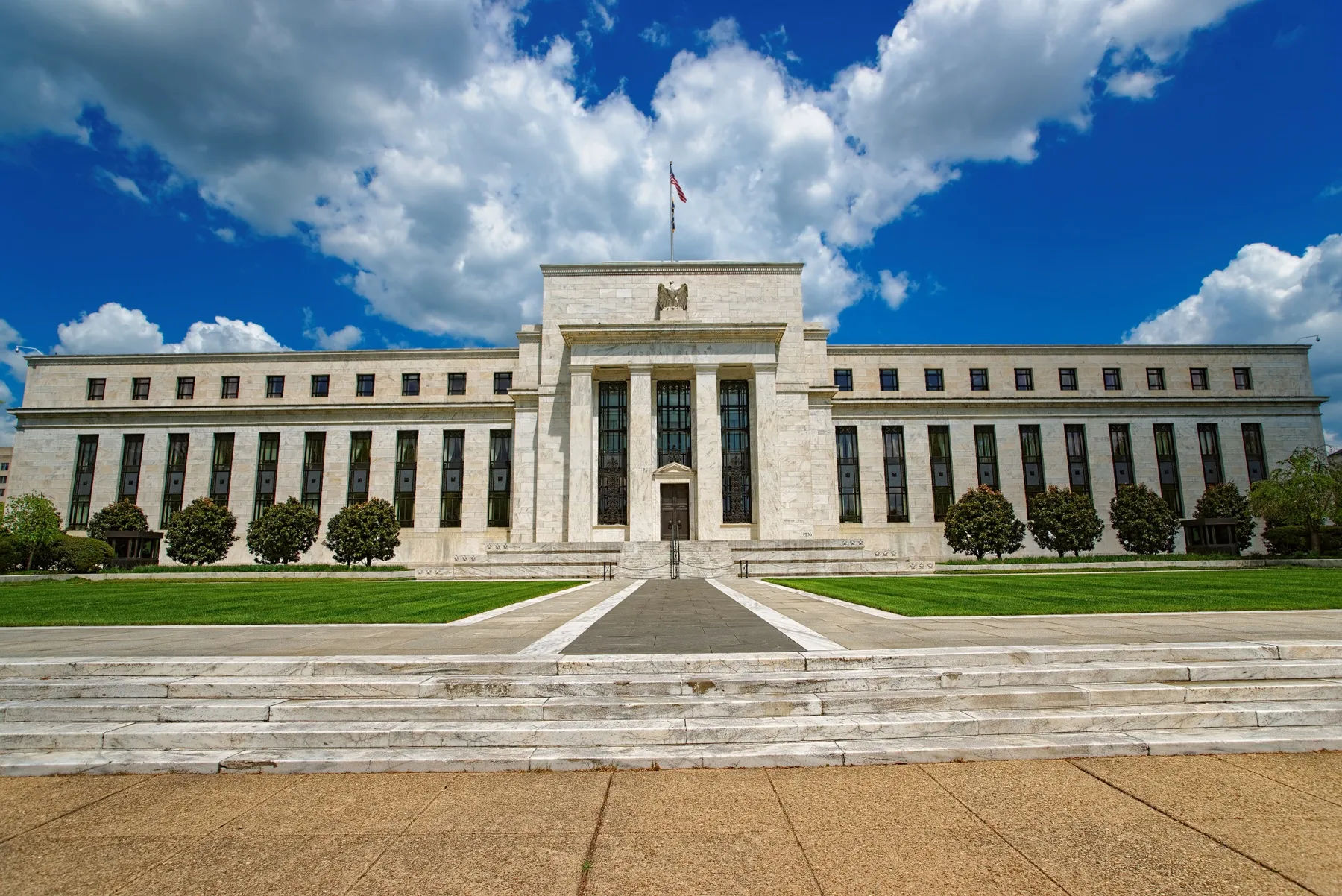
The two central banks involved are the European Central Bank, which sets policy for every country that uses the euro, and the US Federal Reserve. Each sets a policy interest rate. Higher rates make deposits and bonds in that currency pay more, which draws in foreign money, and that money has to buy the currency first. Step through the chain below, then switch it to a cut.
How a rate decision reaches the exchange rate: rates, yields, capital flows, demand for the currency, price. Switch to a rate cut to see every arrow reverse.
For EUR/USD, that chain runs on both sides at once. A Fed hike tends to lift the dollar, which pushes EUR/USD down. An ECB hike tends to lift the euro, which pushes EUR/USD up. What the pair responds to is the balance between the two, the rate differential, and it works like a seesaw.
Three practical points follow from the seesaw.
Expectations move first. Rate decisions are signalled weeks in advance, so by meeting day the expected outcome is usually priced in. What moves EUR/USD on the day is the surprise: a different decision from the one expected, or a statement that is more hawkish or dovish than the market thought. A Fed that holds rates but signals “no cuts this year” when cuts were expected can lift the dollar as much as a hike would. Many traders watch the gap between two-year German and US government bond yields as a running scoreboard of these expectations.
Both banks meet eight times a year. The ECB announces its decision at 13:15 UK time, followed by a press conference at 13:45. The Fed announces at 19:00 UK time, with a press conference half an hour later. On these days EUR/USD can be quiet all morning and then move sharply within minutes. The press conference often matters more than the decision itself, because it is where the future path of rates is discussed.
Inflation and jobs data are rate data in disguise. Each central bank reacts to its own economy: the ECB targets inflation of 2% over the medium term, and the Fed pursues both stable prices and maximum employment. So a strong US jobs report or a hot eurozone inflation figure matters to EUR/USD mainly because it changes what traders expect the Fed or the ECB to do next. Our guide on how interest rates affect currency prices and the Academy lesson on central banks and interest rates cover this chain in full.
The other EUR/USD drivers: data, risk mood and energy
Rates are the backbone, but several other forces push EUR/USD around, often by changing rate expectations and sometimes on their own. The map below groups the main ones by the direction they usually push the pair. Context can flip any of them.
US data: jobs and inflation lead
Because the dollar sits on one side of the pair, US releases move EUR/USD as much as European ones, often more. The two heaviest hitters are the monthly jobs report, known as non-farm payrolls, usually on the first Friday of the month, and the CPI inflation report around the middle of the month. Both come out at 8:30 a.m. New York time, which is 13:30 UK time for most of the year (12:30 for a few weeks in spring and autumn, when the US and UK change their clocks on different dates). Retail sales, the ISM business surveys and quarterly GDP matter too, but rarely as much. The lessons on jobs data and NFP and inflation and CPI explain how each is read.
Eurozone data: flash PMIs and HICP
On the European side, two releases stand out. The flash PMIs are business surveys published around the third week of each month, early in the London morning, with separate figures for Germany, France and the eurozone as a whole. A reading above 50 signals expansion, below 50 contraction. Because they arrive weeks before official growth data, they are one of the earliest reads on the eurozone economy. The second is the flash HICP, the eurozone’s headline inflation estimate, published by Eurostat around the turn of each month, mid-morning UK time. The ECB’s inflation target is defined using HICP, so a surprise here feeds straight into ECB expectations. German state and national inflation figures, released a day or two earlier, often give the market an early hint.
Risk sentiment
When markets are calm and confident, often called risk-on, money tends to flow out of the dollar into other currencies, which supports EUR/USD. When fear rises, the dollar is a classic safe haven: investors around the world buy it, and EUR/USD tends to fall, sometimes sharply. This is why EUR/USD can drop on a day with no European news at all, simply because equity markets are selling off. The lesson on risk-on and risk-off maps how each major currency behaves.
Energy
The eurozone imports most of the energy it uses, so a sharp rise in oil and especially natural gas prices acts like a tax on its economy: it worsens the trade balance and squeezes growth. The 2022 energy shock is the clearest recent example, when EUR/USD fell below parity (1.0000) for the first time in around two decades. You do not need to trade energy to trade EUR/USD, but a glance at gas and oil prices is worth adding to your morning routine.

EUR/USD and other pairs
Because so many forces act on the dollar, EUR/USD tends to move in step with other dollar pairs. It usually moves with GBP/USD and AUD/USD, and in the opposite direction to USD/CHF. That is useful for confirming a move and dangerous if you open several trades that are really the same bet. Tap a cell below to see what each relationship means.
Typical correlation between pairs
| EUR/USD | GBP/USD | AUD/USD | USD/JPY | USD/CHF | USD/CAD | |
|---|---|---|---|---|---|---|
| EUR/USD | ||||||
| GBP/USD | ||||||
| AUD/USD | ||||||
| USD/JPY | ||||||
| USD/CHF | ||||||
| USD/CAD |
Tap any cell to see what that correlation means for two open positions.
How many times are you really betting on the dollar?
Illustrative long-run correlations between EUR/USD and other major pairs, not live data. Note how closely EUR/USD tracks GBP/USD and how strongly it moves against USD/CHF.
For a wider tour of what moves every major currency, read our guide to fundamental analysis in forex.
How to read a EUR/USD release day
Most EUR/USD trading days contain at least one scheduled release worth knowing about, and a few contain a release that can move the pair more in five minutes than in the previous five hours. The economic calendar tells you when they are, and reading it well is mostly about three numbers: previous, forecast and actual. Try the mock calendar below. Tap a row, then slide the actual figure away from the forecast.
| Time | Cur. | Impact | Event | Previous | Forecast | Actual |
|---|---|---|---|---|---|---|
| 13:30 | USD | ●●● | 3.2% | 3.1% | — | |
| 13:30 | USD | ●●● | 185k | 170k | — | |
| 19:00 | USD | ●●● | 4.5% | 4.5% | — | |
| 13:30 | USD | ●●● | 2.1% | 2.4% | — | |
| 13:30 | USD | ●●● | 3.9% | 3.9% | — | |
| 09:30 | GBP | ●●● | 50.2 | 50.5 | — |
A mock economic calendar for a busy day. Tap a row to load the event, then move the actual figure. EUR/USD reacts to the surprise against the forecast, not to the number itself. Reactions are illustrative.
Notice that an actual figure equal to the forecast produces almost no reaction. The forecast is the market consensus, and prices already reflect it. The move comes from the gap. A US jobs report that beats the forecast by a wide margin tends to lift the dollar and push EUR/USD down; one that misses tends to do the opposite.
On a release day, a simple sequence works well:
- Before the session: check the calendar for high-impact US and eurozone events, note the times in your own time zone, and write down the forecast for each.
- Decide in advance what you will do. Many traders stay flat for the few minutes either side of a major release. Others close or reduce positions. Very few beginners benefit from trying to trade the first spike.
- Expect the spread to widen. In the seconds around a big number, spreads can jump to several times their normal width and orders can fill well away from the price you clicked, which is called slippage.
- Let the first move settle. The initial reaction is often partly reversed as traders read the detail, such as revisions to previous months or wage growth inside a jobs report.
- Then trade your plan, not the headline. If your normal setup appears after the dust has settled, take it with normal size. If it does not, there is no trade.
The lesson on the economic calendar explains impact ratings and how to filter the calendar for the currencies you trade.
EUR/USD trading: a practical checklist for the day
Everything above comes together in a short routine. You do not need to analyse every driver every day. You need to know which ones are live today, when the important moments are, and whether conditions suit your method. Tick through the list below before your session; it saves in your browser so you can reuse it.
EUR/USD trading-day checklist
0 of 8
EUR/USD’s fixed pip value makes sizing easy: divide the amount you are willing to lose by the distance to your stop in pips, then by $10 to get standard lots. The worked example below shows the full calculation, and our guide to forex risk management and the lesson on position sizing cover it in detail.
Common mistakes when trading EUR/USD
Treating it as a euro trade only
New traders often read European news, form a view on the euro and forget that half the price is the dollar. A great eurozone PMI can be completely swamped an hour later by a strong US inflation figure. Before any EUR/USD trade, ask what is happening on both sides.
Trading the headline instead of the surprise
“Rates went up, so buy the currency” is the classic error. If the hike was expected, it was already in the price, and a cautious press conference can send the currency the other way. Compare every number with its forecast, and every decision with what was expected.
Stacking dollar trades without realising it
Buying EUR/USD, buying GBP/USD and selling USD/CHF feels like three trades. In practice it is one large bet against the dollar, and one strong US data release can hit all three at once. Count your total dollar exposure, as the correlations lesson shows.
Trading the quiet hours out of habit
Trading EUR/USD late in the US evening or deep in Asian hours means wider spreads and smaller, less reliable moves. If those are the only hours you have, consider whether a pair that is active then suits you better.
Being caught by a scheduled event
Holding a position into a Fed decision or a jobs report without knowing it was coming is not a strategy. It takes thirty seconds to check the calendar, and it is the first item on the checklist for a reason.
Frequently asked questions
When is the EUR/USD pair most active?
EUR/USD is usually most active during the London session and especially the London–New York overlap, roughly 13:00 to 17:00 UK time. Major US data at 13:30 UK time and central bank decisions add bursts of activity. Asian hours are usually quiet, with wider spreads and smaller moves.
How much is 1 pip worth on EUR/USD?
Because the quote currency is the US dollar, one pip on EUR/USD is worth $10 on a standard lot of 100,000 euros, $1 on a mini lot and 10 cents on a micro lot. If your account is in another currency, the broker converts that dollar value at the current exchange rate.
What moves EUR/USD the most?
Over time, the main driver is the gap between eurozone and US interest rates and where markets expect it to go. Day to day, the biggest moves usually come from surprises in US jobs and inflation data, ECB and Fed decisions and press conferences, eurozone inflation and PMI figures, and shifts in global risk mood.
Why is EUR/USD called fiber?
Fiber is a long-standing trader nickname for EUR/USD, much as GBP/USD is called cable. Explanations for the name vary and none is certain. It is market slang, and you will see it in commentary and chat, sometimes spelt fibre in British English.
Is EUR/USD good for beginners?
It suits many beginners because it is the most traded pair, with usually tight spreads, a fixed $10 pip value per standard lot and plenty of educational coverage. That makes it cheaper and simpler to practise on. It is not easier to predict, and the same risk rules apply as on any other pair.
How many pips does EUR/USD move in a day?
It varies with the news cycle. On an ordinary day the range is often a few tens of pips, and on days with major US data or a central bank meeting it is usually noticeably wider. Look at recent daily ranges on your own charts rather than relying on a fixed figure.
Free course
Learn this step by step
“Fundamental Analysis” is a free BrokerCut Academy course: 9 short lessons (about 70 minutes), quizzes, interactive tools and a certificate when you finish.
Enrol free