Lot Sizes in Forex Explained: Standard, Mini, Micro and Nano
Lot size in forex explained: standard, mini, micro and nano lots, what 0.01 lots means, what each pip is worth and how lot size sets your risk.

Every time you place a trade, your platform asks for one number, and the box usually says 0.01 or 1.00. That number is your lot size, and in forex it decides more about what a trade can win or lose than anything else you type.
Quick answer: A lot is a fixed amount of the base currency. A standard lot is 100,000 units, a mini lot 10,000, a micro lot 1,000 and a nano lot 100. Platforms show size as decimals, so 0.01 is one micro lot. On EUR/USD, one pip is worth $10, $1, $0.10 or $0.01 at those sizes.
What is a lot size in forex?
A lot is the unit you use to say how much currency you are trading. It is always measured in the base currency, the first currency in the pair. Buy one standard lot of EUR/USD and you are buying 100,000 euros (and selling the equivalent in dollars). Sell one standard lot of GBP/USD and you are selling 100,000 pounds. Buy one standard lot of USD/JPY and you are buying 100,000 US dollars.
Lots exist because currency prices move in tiny steps. EUR/USD might move from 1.0800 to 1.0801, a change of one pip, or 0.0001. On a single euro that is a hundredth of a cent, which nobody would notice. To turn moves that small into amounts that matter, forex has always been traded in large round blocks. The interbank market deals in millions; retail brokers broke that down into smaller blocks so that individuals could take part.
There are four sizes you will meet. Each one is ten times smaller than the one before it:
- A standard lot is 100,000 units of the base currency.
- A mini lot is 10,000 units.
- A micro lot is 1,000 units.
- A nano lot is 100 units.
The easiest way to hold these in your head is as boxes inside boxes. A standard lot contains ten mini lots, each mini lot contains ten micro lots, and each micro lot contains ten nano lots. The diagram below draws them with their areas to scale, so you can see how quickly the smaller sizes shrink.
A lot is a quantity, not a price. One standard lot of EUR/USD is always 100,000 euros, whether the euro is worth $1.05 or $1.20. What changes with the exchange rate is the dollar value of those euros, which we come to in the section on notional value. Our hub lesson on pips and lots introduces the same idea with a short quiz if you want to test yourself.
Standard, mini, micro and nano lots compared
Most of what you need to know about the four sizes fits in one table. The pip values are for any pair where the US dollar is the quote currency, such as EUR/USD, GBP/USD or AUD/USD, with an account held in dollars.
| Lot | Units of base currency | Platform size | Value of 1 pip | A 50-pip move |
|---|---|---|---|---|
| Standard | 100,000 | 1.00 | $10.00 | $500 |
| Mini | 10,000 | 0.10 | $1.00 | $50 |
| Micro | 1,000 | 0.01 | $0.10 | $5 |
| Nano | 100 | 0.001 | $0.01 | $0.50 |
The standard lot is the historical unit of the retail market and is still the reference point for most quotes. Commissions on raw-spread accounts, swap rates and margin examples are usually quoted “per lot”, meaning per standard lot. At $10 a pip, it is a large position for any account under several tens of thousands of dollars.
The mini lot is a tenth of that: $1 a pip on dollar-quoted pairs. It is a convenient mental unit because the arithmetic is so easy. A 40-pip move on two mini lots is 40 × $2 = $80.
The micro lot is the smallest size almost every broker offers, and it is the size that matters most for small accounts. At 10 cents a pip, a routine 50-pip move costs $5. Because platforms let you trade in steps of one micro lot, it is also the building block of precise position sizing.
The nano lot, at 100 units, is the outlier. Only a small number of brokers offer it, sometimes on a separate account type rather than through the normal lot field. Some brokers reach similarly tiny real sizes through cent accounts, where the balance is shown in cents; the lesson on account types explains how those work. If your broker’s smallest size is 0.01, you have no nano lots, and nothing in your trading needs to change because of it.
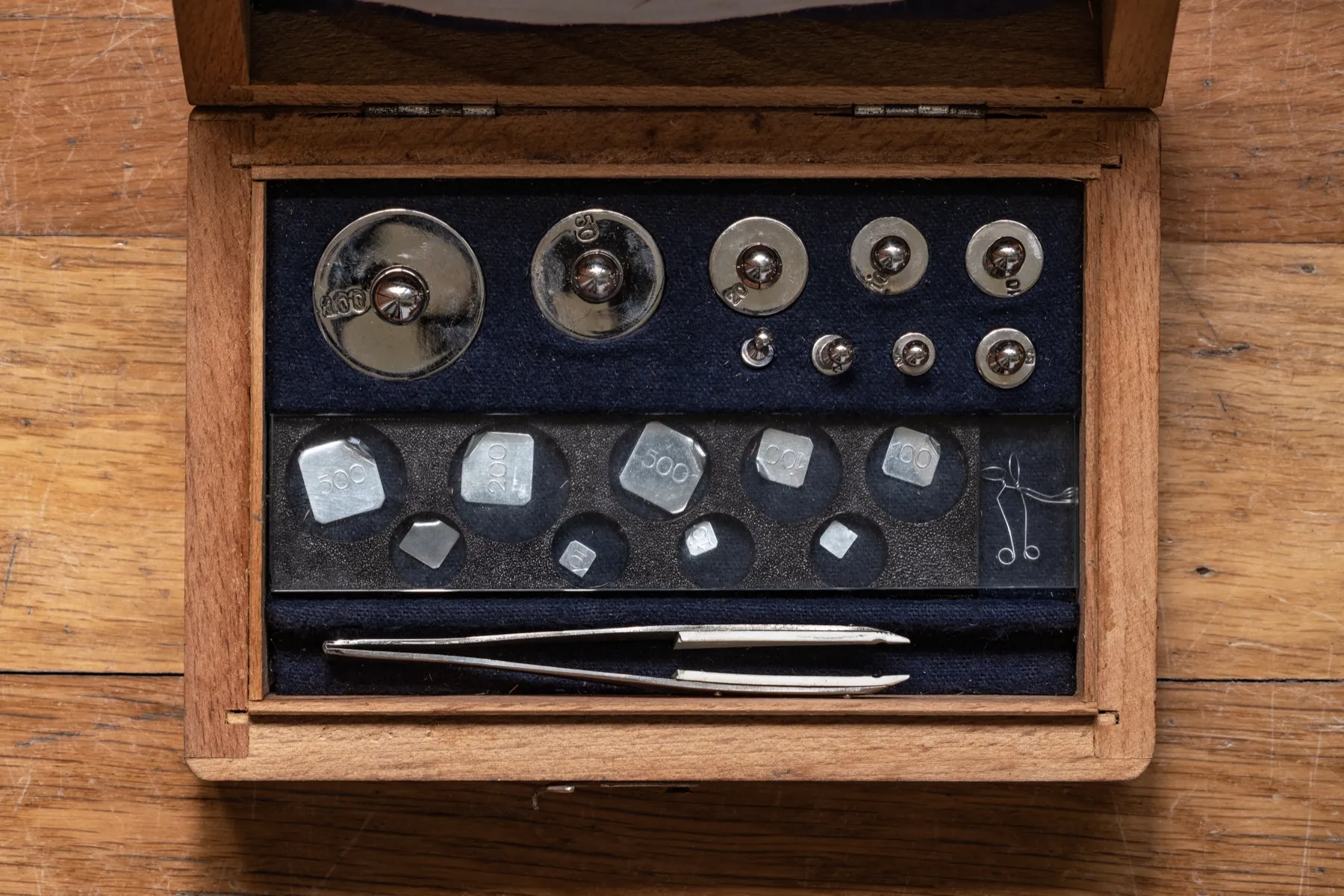
The tool below draws standard, mini and micro lots as squares of 1,000 units each. Compare the size of the block you would usually trade with the size you might be tempted to trade.
Standard, mini and micro lots as squares of 1,000 units each. A standard lot is a hundred times larger than a micro lot, so every pip is worth a hundred times more.
How platforms show lot size: 0.01, 0.10 and 1.00
You will rarely type the words “mini lot” anywhere. Trading platforms, including the widely used MetaTrader software, ask for size as a single decimal number, often labelled volume. The number is always expressed in standard lots, so the decimal places do the work:
- 1.00 is one standard lot (100,000 units).
- 0.10 is one mini lot (10,000 units).
- 0.01 is one micro lot (1,000 units).
- 0.001 is one nano lot (100 units), on the few platforms that accept a third decimal.
Read each digit as a count of one lot size. A volume of 0.37 means no standard lots, three mini lots and seven micro lots: 37,000 units in total. A volume of 1.25 is one standard lot, two mini lots and five micro lots, or 125,000 units.
Minimum lot and lot step
Every instrument on your platform has three size rules, listed in its contract specification (usually labelled something like minimum volume, maximum volume and volume step):
- Minimum lot: the smallest trade you can open. For forex pairs at most retail brokers this is 0.01, one micro lot.
- Lot step: the increment between allowed sizes. With a step of 0.01 you can trade 0.06 or 0.07 lots, but not 0.065. If the step is 0.1, you can only trade in whole mini lots.
- Maximum lot: the largest single order the broker accepts. Beginners rarely meet it.
When you calculate a position size, the answer is almost never a round number. The step decides how close you can get to it, and the safe habit is to round down, never up, so that your actual risk is at or below what you planned. On a small account, the difference between 0.06 and 0.07 lots can be the difference between risking 0.9% and 1.05% of your money.
Some platforms skip lots entirely and let you type the size in units, such as 6,000 or 37,500. That is the same thing expressed without the decimal: 6,000 units is 0.06 lots. If your platform works in units, you effectively have a lot step of one unit, which makes precise sizing even easier.
Lot size and pip value: what each pip is worth
A pip tells you how far the price moved. Lot size turns that distance into money. The relationship is simple multiplication:
Pip value = pip size × units traded
On EUR/USD a pip is 0.0001, so one standard lot gives 0.0001 × 100,000 = 10 units of the quote currency, which is $10. Divide by ten for each step down the ladder: $1 for a mini lot, $0.10 for a micro lot and $0.01 for a nano lot. Once you have the pip value, the money result of any trade is one line: pips moved × pip value × number of lots.
Because the relationship is linear, sizes in between work exactly as you would expect. 0.25 lots of EUR/USD is worth $2.50 a pip; 0.06 lots is worth 60 cents a pip; 2.00 lots is worth $20 a pip. Try your own prices in the counter below. Pick two EUR/USD prices and watch how the same move is worth very different amounts at each size.
The highlighted digit is the pip. For USD/JPY the pip is the second decimal and its dollar value depends on the price.
The $10-per-standard-lot figure only holds when the quote currency matches your account currency. On USD/JPY the pip is 0.01 and is measured in yen: one standard lot gives ¥1,000 per pip, which at a price of 150.00 is about $6.67. A mini lot is then about $0.67 a pip and a micro lot about $0.07. Pairs such as EUR/GBP or AUD/CAD need a similar conversion into your account currency. Your platform does this for you, but it is worth knowing why a “$10 pip” is sometimes not $10. Our guide to what a pip is walks through the conversion for every type of pair.
Notional value and margin by lot size
Lot size tells you how many units you are trading. Two other numbers follow from it, and beginners often mix them up with each other and with risk.
Notional value is the full value of the position in your account currency. For EUR/USD it is the number of euros multiplied by the exchange rate. At 1.0800:
| Lot | Units (EUR) | Notional value | Margin at 1:30 |
|---|---|---|---|
| Standard (1.00) | 100,000 | $108,000 | $3,600 |
| Mini (0.10) | 10,000 | $10,800 | $360 |
| Micro (0.01) | 1,000 | $1,080 | $36 |
| Nano (0.001) | 100 | $108 | $3.60 |
For pairs where the dollar is the base currency, such as USD/JPY or USD/CAD, notional value in dollars is the number of units: one standard lot is $100,000 whatever the price.
Margin is the part of your balance the broker sets aside to keep the position open, worked out from the notional value and your leverage. At 1:30, the maximum on major pairs for retail clients under the rules of the UK’s Financial Conduct Authority and the EU’s European Securities and Markets Authority, the margin is one thirtieth of the notional value. So 0.10 lots of EUR/USD at 1.0800 has a notional value of $10,800 and needs $10,800 ÷ 30 = $360 of margin.
Margin is a deposit, not the amount you can lose. Your profit or loss is calculated on the full notional value. A 1% move in EUR/USD from 1.0800 is about 108 pips; on one mini lot at $1 a pip, that is a $108 gain or loss, nearly a third of the $360 margin. Higher leverage would shrink the margin further, but the $108 would not change, because it depends only on the lot size.
The slider below is set to a $2,000 account and 0.10 lots at 1:30. Move the leverage and watch the margin bar change while the loss from a 50-pip move stays fixed. Then change the lot size and watch the loss move instead.
Margin locked up Loss from a 50-pip move against you
If margin, free margin and margin calls are new to you, our guide to what margin is in forex covers them in full, and the Academy lesson on leverage and margin has a quick quiz. For why the leverage on offer should never set your trade size, see leverage in forex.
How lot size relates to risk
The lot size you choose is the risk you take. Your stop loss sets how many pips you can lose; your lot size sets how much each of those pips costs. Multiply the two and you have the money at risk on the trade.
So pick the risk and the stop first, then the size. Decide how much of the account you are willing to lose on one trade, usually expressed as a percentage called risk per trade, place the stop loss where the trade idea is proven wrong, and only then work out the size that fits. The formula is:
Lots = money at risk ÷ (stop in pips × pip value per standard lot)
The chart below shows why this order matters. It takes a $2,000 account and a 30-pip stop on EUR/USD, and shows what you lose at four different lot sizes if the stop is hit.
One standard lot would put 15% of the account on a single idea, and at 1:30 it would not even open, because it needs $3,600 of margin. One mini lot looks modest but still risks 1.5%. The size that fits a 1% limit is 0.06 lots, a figure you would never guess without doing the sum. Try the calculator below with your own numbers: enter your balance, risk percentage and stop in pips, and leave the pip value at $10 for any dollar-quoted pair.
This article stops at the link between lots and risk. The full method, including how to handle wide stops, yen pairs and accounts in other currencies, is in our guide to position sizing in forex and the Academy lesson on position sizing. For why the percentage itself should be small, see the lesson on risk per trade.
Lots, units and contracts: clearing up the confusion
Much of the confusion about lot size comes from different words for the same thing, and the same word for different things.
Lots versus units. These are two ways of writing one quantity. 0.06 lots and 6,000 units of EUR/USD are the same trade. Some platforms, and some trade confirmations, use one and some the other. If you ever see a number with no decimals and lots of zeros, it is almost certainly units.

Lots versus contracts. In forex CFDs and rolling spot, “contract” is sometimes used loosely to mean one standard lot, and a contract statement may show “contract size: 100,000”. On a futures exchange, though, a contract is a fixed exchange-defined size that has nothing to do with retail lots. The standard euro futures contract on the Chicago Mercantile Exchange, for example, covers 125,000 euros. If you move between spot forex and futures, check the size of each contract rather than assuming.
“1 lot” on other instruments. The 100,000-unit rule applies to currency pairs only. When your platform lists gold, oil, stock indices or cryptocurrencies, it uses the same volume box, but one lot means something different on each. On gold, one lot is often 100 troy ounces; on an index, one lot might be one contract worth a set amount per index point; on oil it varies from broker to broker. A trader who opens “0.10 lots” of an index because that size felt comfortable on EUR/USD may be taking a position several times larger, or smaller, than intended. Before trading any non-currency product, open its contract specification and read the contract size, the value of one point and the minimum lot.
Costs follow lot size too. Commissions on raw-spread accounts are usually quoted per standard lot, so a $7 round-trip commission per lot costs $0.42 on 0.06 lots. Spread costs and overnight swap scale in the same way. Our guide to forex trading costs shows how to add them up.
Common lot size mistakes
Thinking “one lot” sounds small
“I only opened one lot” is one of the most expensive sentences in retail trading. One standard lot is $10 a pip on dollar-quoted pairs. On a $2,000 account, a routine 50-pip move against it is a $500 loss, a quarter of the money. If you hear yourself describing size in lots without knowing the pip value, stop and do the sum.
Choosing a lot size before the stop
Picking a “usual” size such as 0.10 and then placing the stop wherever it fits gets things backwards. The stop belongs where your idea is proven wrong; the lot size is what you adjust so that the stop costs an acceptable amount. On the same account, a wider stop means a smaller size.
Confusing margin with risk
A trade needing $216 of margin can lose far more than $216 if it has no stop, or less if the stop is close. Margin tells you how much of your balance is locked up, not how much is at stake. Your risk is stop distance × pip value × lots, and nothing else.
Assuming every pip is worth $10 a lot
That figure is for pairs quoted in dollars with a dollar account. On USD/JPY it is about $6.67 at 150.00, and on non-currency instruments the whole idea of a lot changes. Check pip value whenever you trade something new.
Rounding up
When the calculator says 0.0667, typing 0.07 feels close enough. It is a small breach of your own rule, and small breaches become habits. Round down to the lot step, every time.
Frequently asked questions
What lot size should a beginner use in forex?
There is no single right size; it should come from your account, your risk per trade and your stop. In practice, most beginners with accounts of a few thousand dollars end up trading micro lots. For example, risking 1% of $2,000 with a 30-pip stop on EUR/USD gives 0.06 lots. Calculate it for every trade rather than reusing one number.
How much is 0.01 lot in forex?
0.01 lots is one micro lot: 1,000 units of the base currency. On pairs quoted in US dollars, such as EUR/USD, each pip is worth about $0.10, so a 50-pip move is $5. With EUR/USD at 1.0800 the position is worth $1,080 and needs $36 of margin at 1:30 leverage.
How much is 1 lot in forex?
One lot, or 1.00 on a platform, is a standard lot of 100,000 units of the base currency. On EUR/USD each pip is worth $10, so a 50-pip move is $500. At 1.0800 the position is worth $108,000 and needs $3,600 of margin at 1:30. That is a large trade for most retail accounts.
What is a nano lot in forex?
A nano lot is 100 units of the base currency, a tenth of a micro lot. On dollar-quoted pairs a pip is worth about one cent. Only a few brokers offer nano lots, sometimes through a special account type. They can be useful for practising with real money at tiny stakes, but most traders work in micro lots as the smallest size.
Is lot size the same as leverage?
No. Lot size is how much currency you trade and decides what each pip is worth. Leverage decides how much margin the broker sets aside for that position. Raising leverage reduces the margin needed but does not change the profit or loss per pip. Your risk comes from lot size and stop distance, not from leverage.
How many units are in 0.5 lots?
0.5 lots is 50,000 units of the base currency: half a standard lot, or five mini lots. On a dollar-quoted pair such as GBP/USD, each pip is worth $5, so a 40-pip move is $200. On GBP/USD at 1.2700 the position is worth $63,500 in notional value.
Free course
Learn this step by step
“Forex Foundations” is a free BrokerCut Academy course: 11 short lessons (about 92 minutes), quizzes, interactive tools and a certificate when you finish.
Enrol free